
Breaking Patterns: A Therapy Group for Relationships and Self
Group therapy offers a structured and clinically guided space to explore relational patterns in the presence of others.
Unlike individual therapy, where experiences are explored one-on-one, group therapy allows individuals to observe and reflect on how they relate, respond, and engage in real time within a group setting.
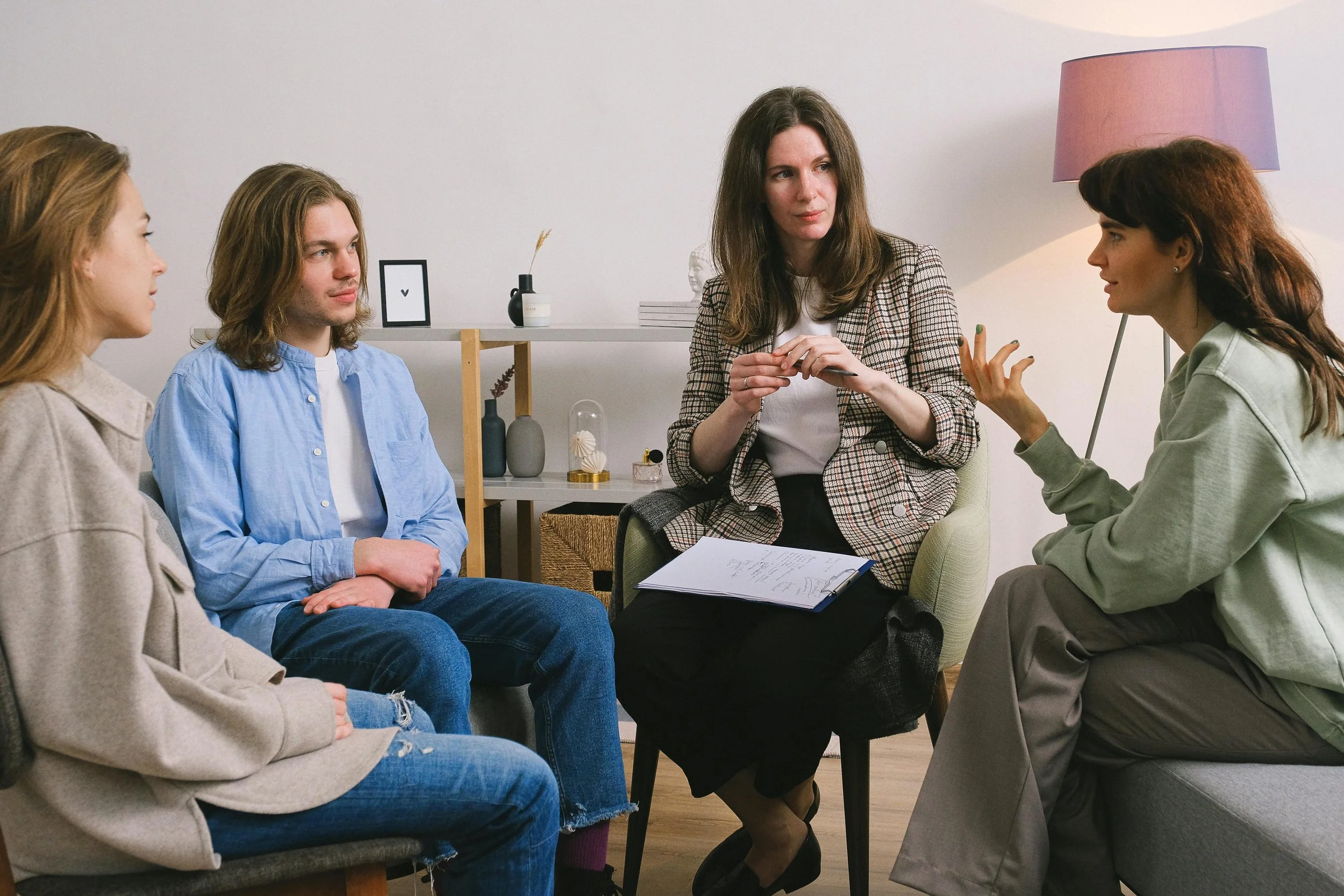
“Therapeutic change is… an interplay of human experiences.”
Who It May Be Suitable For
People who feel stuck in recurring or unhelpful patterns
People who would like to build emotional regulation and coping skills
People who feel isolated or disconnected from others
People seeking support with relationships and communication
People who would benefit from a structured and supportive space for personal growth
How Group Therapy Works
Participants are supported to:
Notice how they respond to others in the moment
Reflect on emotional reactions as they arise
Identify recurring interpersonal patterns
Explore how past experiences may influence current relationships
In a psychodynamic group, the focus is on understanding patterns that may emerge in relationships — both within the group and in everyday life.
This process can provide insight that is not always accessible in individual therapy alone.
What to expect
Group therapy is facilitated by a psychologist and follows a structured therapeutic approach.
Sessions provide a consistent and confidential environment where participants can engage at their own pace.
At times, individuals may choose to speak and share experiences. At other times, observing and reflecting on the group process can also be valuable.
-
Duration: 10 weeks
Session length: 90 minutes per week
Group size: 4–6 participants
Format: Closed group (same members throughout the program)
This structure is designed to support continuity, safety, and the development of a cohesive group process over time.
-
The group integrates a number of evidence-informed approaches, including:
Attachment-informed and developmentally oriented frameworks
Interpersonal process therapy
Experiential, in-the-moment relational work
Together, these approaches support participants in exploring patterns as they emerge within the group, while also linking these experiences to relationships outside of the group setting.
-
All participants complete a pre-group assessment to determine suitability.
This process helps ensure that the group is appropriate for each individual and supports the development of a safe and cohesive group environment.
-
Fees will be confirmed prior to the commencement of each group session.
Group therapy is typically offered as a structured program over multiple weeks, with payment arrangements outlined in advance.
This format may provide a more cost-effective option compared to individual therapy, while offering a consistent and supported therapeutic experience.
Referral Information
Referrals are welcome for individuals who:
Experience ongoing relational difficulties across different contexts
Demonstrate some capacity for reflection and psychological insight
May benefit from a relational and experiential therapeutic approach
Group therapy may also provide a cost-effective alternative or complement to individual therapy.
If you are interested in joining a group, the first step is to complete a brief enquiry.
This allows us to provide you with further information and guide you through the next steps.

Frequently Asked Questions (FAQ)
-
The group runs for approximately 10 weeks, with weekly sessions.
-
Each session is 90 minutes, allowing time for deeper exploration of experiences and relational dynamics.
-
There is no requirement to share more than you feel comfortable with.
Participation can vary over time, and individuals are supported to engage at their own pace. -
All participants complete a pre-group assessment to determine suitability.
This process helps ensure that the group is appropriate for your needs and supports the development of a safe and cohesive group environment.
-
Group therapy offers the opportunity to explore relational patterns in real time with others.
This can provide insights that may not always emerge in individual therapy alone.
It may also serve as a cost-effective alternative or complement to one-on-one therapy.
Enquire
If you’d like to enquire about upcoming groups session, please contact the practice and we will respond with next steps.